

Many dog owners see signs of anxiety or frustration in their pets and wonder why simple training does not address deeper emotional issues. Navigating a dog’s emotional health demands more than just routine commands or daily walks—it requires understanding their unique inner world and needs. By tapping into scientifically-based enrichment and fostering strong bonds, conscious owners and professional trainers can nurture true emotional well-being, helping their dogs feel safe, connected, and truly understood.
Table of Contents
- Dog Emotional Health Defined and Misunderstood
- Influence of Human Emotions and Attachment
- Environmental Factors and Daily Life Stressors
- Genetics, Breed Differences, and Early Socialization
- Mental Stimulation, Bonding, and Enrichment Activities
- Risks of Neglect and Common Owner Mistakes
Key Takeaways
| Point | Details |
|---|---|
| Understanding Dog Emotional Health | Dog emotional health transcends mere behavioral training, reflecting complex emotional experiences similar to human psychology. |
| Importance of Social Interaction | Consistent social engagement and mental stimulation are vital for a dog’s emotional well-being and resilience. |
| Impact of Human Emotions | Human emotions significantly influence a dog’s psychological state, fostering a dynamic emotional relationship between species. |
| Risks of Neglect | Inconsistent care and emotional neglect can severely harm a dog’s psychological health, leading to behavioral issues and distress. |
Dog Emotional Health Defined and Misunderstood
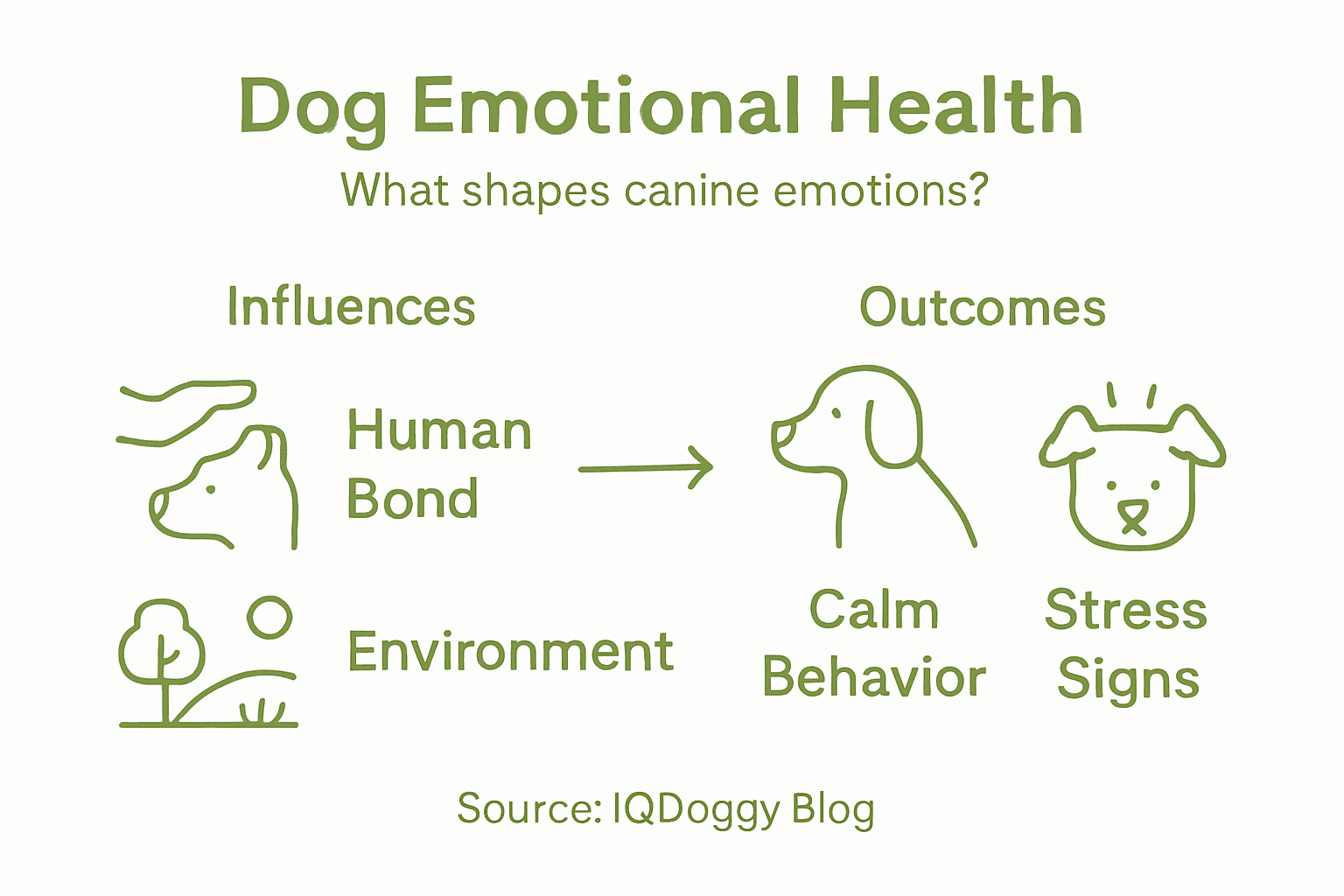
Dog emotional health represents a complex psychological landscape far beyond simple behavior modification or basic training techniques. Unlike traditional views that considered dogs merely as domesticated animals, contemporary research reveals dogs possess intricate emotional experiences comparable to human psychological frameworks.
Understanding canine emotional wellness requires recognizing multiple interconnected factors that influence their psychological state. Comprehensive pet enrichment involves addressing their comprehensive psychological and physiological needs, which extend well beyond physical care.
Key components of dog emotional health include:
- Consistent social interaction
- Mental stimulation through engaging activities
- Predictable and secure environmental conditions
- Emotional bonding with primary caregivers
- Regular physical exercise and play
Dogs experience emotions through complex neurological and hormonal processes that trigger responses similar to human emotional reactions. They can experience stress, anxiety, happiness, fear, and even complex attachment behaviors that reflect sophisticated emotional intelligence.
Emotional health in dogs is not about eliminating all negative experiences, but helping them develop resilient coping mechanisms and healthy emotional regulation.
Research indicates that dogs can significantly impact human emotional wellness, demonstrating the profound two-way emotional connection between humans and canines. This mutual emotional exchange highlights the importance of understanding and nurturing dog emotional health as a critical aspect of responsible pet ownership.
Pro tip: Invest time in understanding your dog’s unique emotional signals and create a supportive environment that promotes psychological well-being through consistent, positive interactions.
To better understand factors affecting dog emotional health, here’s a comparison of key influences:
| Influence Area | Examples of Positive Impact | Examples of Negative Impact |
|---|---|---|
| Social Environment | Regular play, friendly visitors | Chronic isolation, social conflict |
| Daily Routine | Predictable feeding and play time | Unpredictable schedules, chaos |
| Human Interaction | Calm, consistent emotional cues | Anger, neglect, inconsistent cues |
| Enrichment Level | Puzzle games, varied walks | Boredom, lack of stimulation |
| Early Experiences | Gentle early socialization | Trauma, lack of exposure |
Influence of Human Emotions and Attachment
The emotional connection between humans and dogs transcends simple companionship, representing a profound psychological bond rooted in mutual understanding and complex neurological responses. Dogs recognize human emotions through sophisticated social cognition mechanisms that enable them to interpret visual and auditory emotional cues.
Human emotions significantly impact a dog’s psychological state, creating a dynamic and intricate emotional ecosystem where both species mutually influence each other’s psychological well-being. This interconnected emotional landscape demonstrates that dogs are not just passive recipients of human emotions, but active participants in emotional exchange.
Key aspects of human-dog emotional attachment include:
- Emotional mirroring and synchronization
- Neurochemical bonding through shared experiences
- Mutual stress response regulation
- Empathetic communication patterns
- Physiological co-regulation of emotional states
Attachment theory research reveals that dogs often function as critical emotional support figures, providing comfort, reducing stress, and creating a sense of security for their human companions. This powerful emotional connection goes beyond simple companionship, representing a deep psychological partnership.
Dogs do not just observe human emotions; they actively integrate and respond to them, creating a unique interspecies emotional communication system.
The biochemical and neurological processes underlying human-dog emotional attachment are complex, involving oxytocin release, shared attention mechanisms, and intricate social cognition pathways that enable profound emotional understanding between species.
Pro tip: Practice consistent, calm emotional communication with your dog to strengthen your mutual emotional bond and enhance psychological synchronization.
Environmental Factors and Daily Life Stressors
Dogs navigate a complex emotional landscape influenced by numerous environmental factors that can significantly impact their psychological well-being. Environmental enrichment strategies play a critical role in managing daily life stressors and maintaining emotional equilibrium for our canine companions.

Modern domestic environments present unique challenges that can trigger stress responses in dogs. These stressors range from subtle changes in household routines to more dramatic disruptions like moving homes, introducing new family members, or experiencing loud noises and unfamiliar environments.
Key environmental stressors that impact dog emotional health include:
- Inconsistent daily routines
- Limited mental and physical stimulation
- Sudden changes in living spaces
- Restricted social interactions
- Lack of predictable environmental boundaries
- Excessive noise or sensory overstimulation
Social environments pose complex challenges for dogs, requiring careful management to balance social opportunities with potential health and emotional risks. Dog parks, daycare centers, and group settings can simultaneously provide valuable social experiences while introducing potential sources of stress and anxiety.
Environmental stability is not about eliminating all changes, but creating a predictable framework that helps dogs feel secure and emotionally balanced.
Understanding and mitigating environmental stressors requires a holistic approach that considers the dog’s individual temperament, past experiences, and specific sensitivities. Proactive enrichment strategies can transform potentially challenging environments into opportunities for emotional growth and psychological resilience.
Pro tip: Create a consistent daily routine with structured enrichment activities to help your dog develop emotional flexibility and reduce environmental stress responses.
Genetics, Breed Differences, and Early Socialization
Canine emotional health emerges from a complex interplay between genetic predispositions and environmental experiences, with genetic factors profoundly influencing behavioral traits that shape a dog’s psychological landscape. Understanding these genetic underpinnings provides critical insights into individual dog emotional characteristics and potential behavioral tendencies.
Each dog breed carries unique genetic markers that contribute to distinct emotional and behavioral patterns. Some breeds demonstrate inherent predispositions towards specific emotional responses, such as heightened sensitivity, increased anxiety, or natural resilience, which are deeply rooted in their genetic inheritance.
Key genetic and breed-specific emotional health characteristics include:
- Breed-specific stress response variations
- Inherited temperament traits
- Neurological predispositions toward anxiety or calmness
- Genetic variations in social interaction capabilities
- Breed-linked emotional intelligence differences
- Neurochemical response variations
Early socialization experiences represent a critical developmental window that significantly shapes a dog’s emotional foundation. The period between 3 and 14 weeks is particularly crucial, during which positive interactions and controlled exposure can dramatically influence future emotional resilience and social adaptability.
Genetics load the gun, but environment pulls the trigger in determining a dog’s emotional development.
Beyond genetic predispositions, environmental interventions can modify and enhance emotional potential. Thoughtful, structured socialization approaches can help dogs overcome genetic limitations, creating opportunities for emotional growth and psychological flexibility.
Pro tip: Invest in comprehensive socialization strategies during your puppy’s critical developmental weeks to counterbalance potential genetic emotional vulnerabilities.
Mental Stimulation, Bonding, and Enrichment Activities
Mental stimulation represents a critical cornerstone of canine emotional health, transforming routine interactions into powerful opportunities for psychological growth and relationship strengthening. Enrichment activities support comprehensive well-being by engaging dogs’ cognitive capabilities and preventing emotional stagnation.
Understanding mental stimulation goes beyond simple entertainment—it’s a sophisticated approach to supporting dogs’ neurological and emotional development. These activities tap into dogs’ natural problem-solving instincts, providing meaningful challenges that promote psychological resilience and prevent boredom-induced behavioral issues.
Key enrichment activities for optimal mental stimulation include:
- Interactive puzzle toys
- Scent tracking games
- Training sessions with novel commands
- Obstacle course challenges
- Hide-and-seek with treats
- Rotating toy collections
- Learning new skill sequences
- Sensory exploration experiences
Mental stimulation prevents cognitive decline and maintains behavioral stability, creating a dynamic approach to emotional wellness that adapts to a dog’s changing life stages. Tailored enrichment strategies can dramatically improve psychological flexibility and reduce stress-related behaviors.
Mental stimulation is not a luxury, but a fundamental requirement for maintaining a dog’s emotional and cognitive health.
Successful enrichment activities are those that align with a dog’s individual personality, energy level, and cognitive capabilities. By creating personalized mental engagement strategies, owners can transform daily interactions into meaningful bonding experiences that support long-term emotional well-being.
Pro tip: Develop a rotating weekly enrichment plan that introduces novel challenges and adapts to your dog’s evolving cognitive and emotional needs.
Here’s a quick reference for tailoring enrichment activities to your dog’s unique needs:
| Dog Trait | Best Enrichment Type | Example Activity |
|---|---|---|
| High intelligence | Advanced problem-solving | Interactive food puzzles |
| High energy | Physical challenges | Agility course |
| Scent-driven | Nose work games | Scent tracking |
| Socially motivated | Group play opportunities | Playdates or daycare |
| Easily stressed | Calming, slow activities | Sensory garden walks |
Risks of Neglect and Common Owner Mistakes
Dog emotional health is profoundly vulnerable to owner behaviors, with systematic neglect causing significant psychological damage that can manifest through complex behavioral and emotional disorders. Understanding these risks requires a comprehensive approach to recognizing subtle signs of emotional distress and proactively addressing potential neglect.
Neglect extends beyond physical deprivation, encompassing emotional and psychological dimensions that can fundamentally alter a dog’s ability to form healthy relationships and respond adaptively to environmental challenges. Dogs are sensitive beings whose emotional landscapes can be permanently disrupted by inconsistent care, lack of mental stimulation, and insufficient social interaction.
Common owner mistakes that compromise dog emotional health include:
- Inconsistent training approaches
- Inadequate socialization
- Ignoring behavioral warning signs
- Unpredictable emotional responses
- Insufficient mental stimulation
- Minimal physical exercise
- Limited positive reinforcement
- Chronic isolation or excessive confinement
Behavioral issues often stem from unmet emotional needs, revealing the intricate connection between owner behaviors and canine psychological well-being. Problems like separation anxiety, aggression, and destructive behaviors frequently emerge as manifestations of deeper emotional neglect.
Emotional neglect is not always visible, but its impact resonates through every aspect of a dog’s psychological functioning.
Recognizing and addressing potential emotional neglect requires a nuanced, empathetic approach that prioritizes consistent, attentive care. Owners must develop a holistic understanding of their dog’s individual emotional landscape, adapting their caregiving strategies to support comprehensive psychological health.
Pro tip: Conduct regular self-assessments of your dog’s emotional needs, seeking professional guidance if you observe persistent behavioral changes or signs of emotional distress.
Enhance Your Dog’s Emotional Health with Science-Driven Support
The article highlights how complex and vital dog emotional health is—shaped by factors like social interaction, mental stimulation, genetic influences, and environmental stability. If you are concerned about managing stress, preventing emotional neglect, or boosting your dog’s psychological resilience through effective enrichment activities, you are not alone. Many dog owners face the challenge of providing consistent emotional support while navigating daily life stressors and unique breed needs.
At IQDoggy, we understand these challenges deeply. Our international blog dedicates itself to helping conscious dog owners like you unlock your dog’s full emotional and mental potential through proven mental activation techniques, stress management strategies, and tailored cognitive enrichment plans. Whether you want to improve bonding, manage anxiety, or enrich your dog’s daily routine, our detailed guides and expert insights offer practical and science-backed solutions.
Discover how to strengthen your dog-human connection and promote emotional well-being today.

Start transforming your dog’s emotional health now by exploring IQDoggy’s trusted resources. Learn how mental stimulation directly impacts happiness and behavior with our comprehensive guides. Take the next step and invest in your dog’s lifelong wellbeing with actionable advice from IQDoggy. Your dog deserves more than basic care. Visit us today.
Frequently Asked Questions
What are the key factors that influence dog emotional health?
Key factors that influence dog emotional health include consistent social interaction, mental stimulation, predictable environments, emotional bonding with caregivers, and regular physical exercise.
How can I improve my dog’s emotional well-being?
To enhance your dog’s emotional well-being, engage in regular play, provide mental enrichment activities, maintain a predictable daily routine, and ensure they receive consistent, positive emotional interactions from you.
What role does early socialization play in a dog’s emotional health?
Early socialization significantly shapes a dog’s emotional foundation, as positive interactions and exposure to different environments during the critical developmental period (3 to 14 weeks) promote resilience and social adaptability in adulthood.
How can neglect affect my dog’s emotional health?
Neglect, whether physical or emotional, can lead to significant psychological damage in dogs. Symptoms may include behavioral disorders, anxiety, and difficulty forming healthy relationships, emphasizing the importance of consistent care and attention.
Leave a Reply