
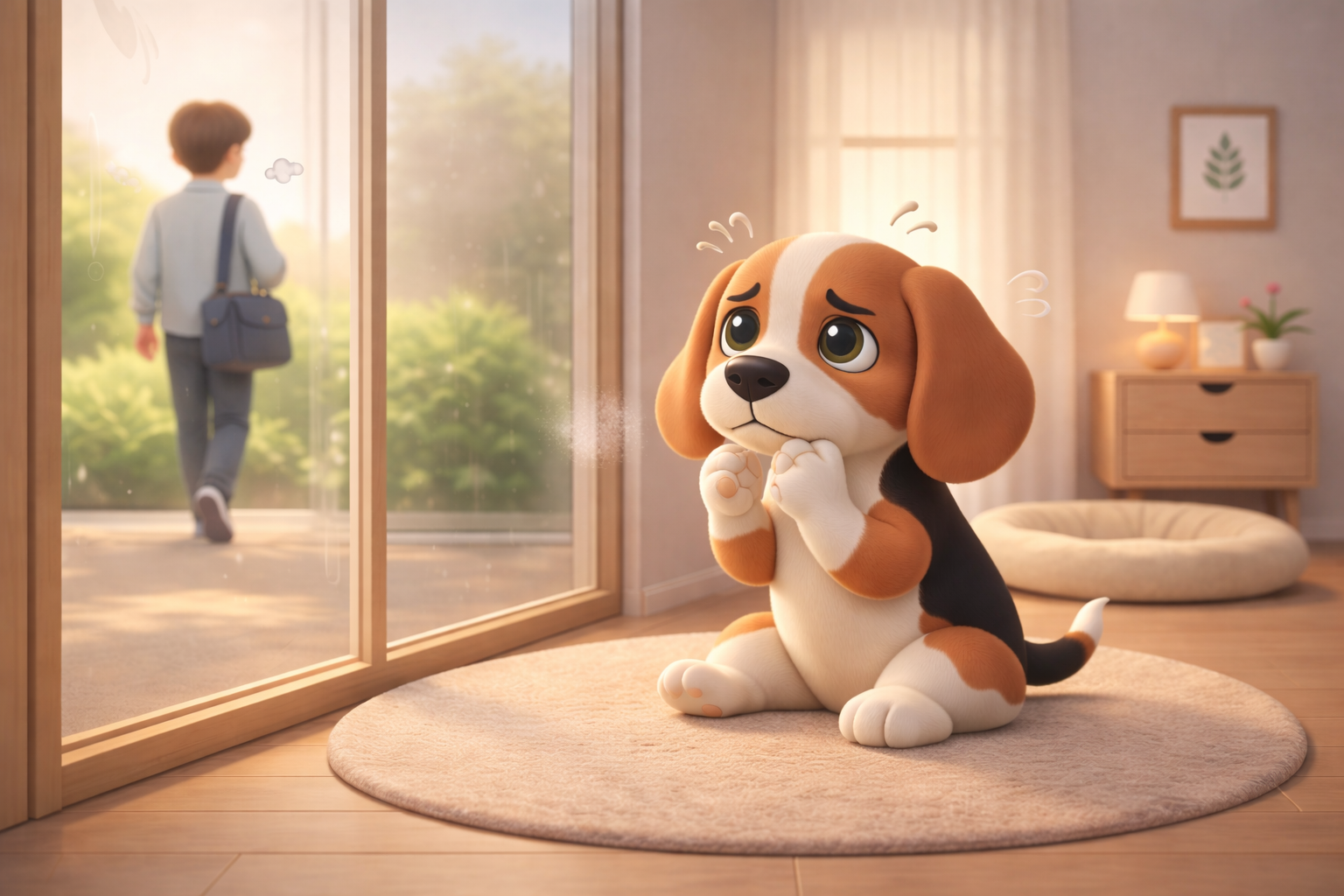
You hear it before you even reach the door: the barking. Or maybe it’s the whining. Sometimes it’s just the eerie silence that tells you something’s been destroyed.
You open the door to find your couch cushions shredded, your neighbor’s angry note about the nonstop howling, or worse—your dog so frantic they’ve injured themselves trying to escape.
This is separation anxiety. And if you’re living with it, you know it’s not just stressful for your dog—it’s emotionally exhausting for you too.
Here’s the truth most trainers won’t tell you upfront: you probably won’t eliminate your dog’s separation anxiety. Some level of attachment is natural—that’s the bond you’ve built. But here’s what you can do: you can dramatically reduce the anxiety, manage the symptoms, and teach your dog that being alone is safe, not scary.
This isn’t about achieving perfection. It’s about progress. Let’s talk about how actually to get there.
Understanding Separation Anxiety: What’s Really Happening
First, let’s distinguish between normal “I miss you” behavior and true separation anxiety.
Normal Separation Distress vs. Clinical Separation Anxiety
Normal behavior when you leave:
- Mild whining or barking for a few minutes
- Watching you leave from the window
- Being excited (but not frantic) when you return
- Settling down within 10-15 minutes of your departure
Separation anxiety red flags:
- Destructive behavior that only happens when you’re gone
- Excessive drooling, panting, or pacing before you leave
- Refusing to eat when alone (even high-value treats)
- House soiling despite being fully housetrained
- Escape attempts that result in injury
- Vocalization (barking, howling) lasting 30+ minutes
- Extreme hyperactivity or trembling when you return
If your dog shows multiple anxiety behaviors, you’re dealing with genuine separation anxiety—and it requires a structured approach to manage.
Why Separation Anxiety Develops
Dogs are pack animals. Being alone isn’t natural for them. Some dogs handle solitude better than others, but several factors increase vulnerability to separation anxiety:
- Genetic predisposition: Some breeds (Vizslas, German Shepherds, Labrador Retrievers) are more prone to anxiety
- Rescue background: Dogs who’ve experienced abandonment often struggle with being left
- Sudden routine changes: Moving, new work schedules, or family changes can trigger anxiety
- Over-attachment: Dogs who’ve never learned independence from puppyhood
- Traumatic experiences: Scary events that occurred while alone (thunderstorms, break-ins)
Understanding the cause doesn’t eliminate the problem, but it helps you approach it with compassion rather than frustration.
The Foundation: Building Independence Gradually
Here’s where most people go wrong: they try to fix separation anxiety by leaving their dog alone for long periods and hoping they’ll “get used to it.”
That’s like treating a fear of heights by throwing someone off a building. It doesn’t build confidence—it reinforces terror.
The correct approach is gradual desensitization: teaching your dog to tolerate being alone in tiny, manageable increments.
Step 1: Practice Non-Departure Departures
Your dog has learned to read your leaving routine. Keys jingling, shoes going on, purse grabbed—these are triggers that spike their anxiety before you even touch the door.
Break these associations:
- Put on your coat, then sit on the couch and watch TV
- Pick up your keys, walk around the house, put them down
- Put on shoes, then do housework for 20 minutes
- Open and close the front door without leaving
Do these actions randomly throughout the day until they become meaningless to your dog. When picking up your keys no longer makes your dog anxious, you’ve succeeded.
Step 2: The 30-Second Departure Protocol
Start obscenely small. We’re talking 30 seconds.
Here’s how it works:
- Give your dog a high-value treat or stuff a Kong toy
- Calmly walk out the door (no goodbyes, no emotion)
- Wait 30 seconds outside
- Return calmly before your dog starts showing anxiety
- Don’t acknowledge them for 2-3 minutes after returning
The critical rule: Return before anxiety starts. If you wait until your dog is already panicking, you’re reinforcing the panic, not teaching calmness.
Repeat this 5-10 times throughout the day. When your dog is completely calm with 30-second absences, move to 1 minute. Then 2 minutes. Then 5.
Step 3: Progressive Duration Training
This is the tedious part—but it’s where real progress happens. Slowly increase alone time:
- Week 1: 30 seconds to 5 minutes
- Week 2: 5 to 15 minutes
- Week 3: 15 to 30 minutes
- Week 4: 30 minutes to 1 hour
- Week 5-8: 1 to 4 hours
Progress isn’t always linear. Some dogs plateau. Some regress. That’s normal. The key is consistency and patience.
If your dog shows anxiety at any level, drop back to the previous successful duration and build more slowly from there.
Creating a Calm Departure Routine
How you leave matters as much as the duration you’re gone.
The Goodbye Problem
Long, emotional goodbyes increase anxiety. When you make a big deal about leaving—”I’ll miss you, be a good boy, I’ll be back soon, I love you”—you’re signaling to your dog that your departure is a big, scary event.
Instead, make leaving boring:
- No eye contact in the 5 minutes before leaving
- No verbal goodbyes
- No petting or reassuring touches
- Simply leave, like it’s no big deal
This seems counterintuitive and might feel cold, but it works. You’re teaching your dog that your comings and goings are mundane, not events to stress over.
The Return Is Just as Important
Your dog is losing their mind when you walk in—jumping, whining, spinning in circles. Your instinct is to match that energy: “Hi buddy! I missed you too!”
Resist.
Calm return protocol:
- Walk in without acknowledging your dog
- Put down your things, take off your shoes, settle in (2-5 minutes)
- Only greet them once they’re calm
- Keep the greeting low-key—gentle petting, quiet voice
This teaches your dog that calm behavior gets rewarded, frantic behavior gets ignored.
Environmental Management: Setting Up for Success
Training is crucial, but the environment plays a huge supporting role.
Create a Safe Space
Some dogs do better when confined to a smaller, den-like space. Others panic when crated. Know your dog.
For dogs who do well with confinement:
- Use a properly sized crate or pen
- Make it cozy with bedding and familiar scents
- Never use it as punishment
- Practice positive crate training when you’re home
For dogs who panic when confined:
- Dog-proof a single room (kitchen, bedroom)
- Remove anything dangerous or valuable
- Provide a comfortable bed in their designated area
Enrichment Before Departure
A tired dog is a calmer dog. But “tired” doesn’t just mean physically exhausted—mental fatigue is even more powerful.
Pre-departure enrichment routine:
- 20 minutes before leaving: Physical exercise (walk, play, fetch)
- 10 minutes before: Mental stimulation (training session, puzzle toy)
- Right before leaving: Long-lasting chew or frozen Kong
The goal is to have your dog mentally and physically satisfied before you go, then occupied with something engaging as you leave.
For evidence-based approaches to canine enrichment and anxiety management, the American Kennel Club offers comprehensive training resources.
Background Noise and Comfort Items
Silence can be unsettling. Many anxious dogs do better with background sound:
- Leave a TV or radio on (moderate volume)
- Use white noise machines or calming music playlists
- Try dog-specific calming music (research shows certain frequencies reduce anxiety)
Scent comfort: Leave an unwashed t-shirt you’ve worn. Your scent provides reassurance without your physical presence.
Tools and Products That Actually Help
No product will “cure” separation anxiety, but several tools support your training efforts:
Interactive Cameras with Treat Dispensers
These devices let you monitor your dog and remotely dispense treats. Benefits:
- See exactly when anxiety behaviors start
- Reward calm behavior remotely
- Speak to your dog (use sparingly—some dogs find this more stressful)
- Track progress over time
Important: Don’t use the camera to constantly interact with your dog. The goal is independence, not virtual presence.
Calming Aids: What Works, What Doesn’t
Evidence-supported calming aids:
- Anxiety wraps/Thunder Shirts: Apply gentle pressure that calms some dogs (like swaddling a baby)
- Adaptil diffusers: Release dog-appeasing pheromones that reduce stress
- CBD oil for dogs: Growing evidence suggests it may reduce anxiety (consult your vet for dosing)
- L-theanine supplements: Amino acid that promotes relaxation without sedation
Use with caution:
- Prescription anti-anxiety medication: Can be helpful for severe cases, but should accompany training, not replace it
- Melatonin: May help, but dosing matters—always consult your vet
Long-Lasting Chews and Food Puzzles
These serve dual purposes: mental stimulation and positive association with your departure.
Best options for separation anxiety:
- Frozen Kong toys: Fill with peanut butter, wet food, or yogurt and freeze overnight (lasts 30-60 minutes)
- Bully sticks or natural chews: Long-lasting, safe, highly engaging
- Puzzle feeders: Deliver meals through problem-solving (extends eating time from 2 minutes to 20+)
- Lick mats: Spread with peanut butter or wet food—licking is naturally calming for dogs
Pro tip: Only give these high-value items when you leave. This creates a positive association with your departure—”When my human leaves, I get the good stuff!”
When to Seek Professional Help
Some cases of separation anxiety require more than DIY training.
Red Flags That You Need a Professional
- Your dog is injuring themselves trying to escape
- Anxiety is getting worse despite consistent training
- Your dog won’t eat or drink when you’re gone
- You’re receiving eviction warnings due to noise complaints
- The stress is severely impacting your mental health
Who to consult:
- Veterinary behaviorist: The gold standard—board-certified specialists in behavior disorders
- Certified dog behavior consultant (CDBC): Professionally trained in behavior modification
- Your veterinarian can rule out medical issues and prescribe anti-anxiety medication if needed
For finding qualified professionals, the American College of Veterinary Behaviorists maintains a directory of board-certified specialists.
Common Mistakes That Make Separation Anxiety Worse
Well-meaning owners often inadvertently reinforce anxiety. Avoid these pitfalls:
Mistake #1: Punishing Anxiety Behaviors
Coming home to destruction and yelling at your dog doesn’t teach them not to be anxious—it teaches them to fear your return. Anxiety isn’t willful disobedience; it’s a panic response.
Instead: Clean up calmly, adjust your training plan, and move forward.
Mistake #2: Constant Reassurance
Petting and soothing an anxious dog feels like the right thing to do, but it can reinforce the anxious state. You’re essentially saying, “Yes, this situation is scary—let me comfort you.”
Instead, Ignore anxious behavior and reward calm behavior.
Mistake #3: Inconsistent Training
Doing desensitization training all week, then leaving your dog alone for 6 hours on Saturday, undoes your progress.
Instead, Plan departures around your training level. If you’re still building to 30 minutes, don’t suddenly leave for 3 hours.
Mistake #4: Getting Another Dog
People think a companion will solve separation anxiety. Sometimes it helps, but often you end up with two anxious dogs instead of one.
Instead: Solve the anxiety issue first, then consider adding another pet if that’s genuinely what you want.
Managing Expectations: Progress, Not Perfection
Let’s be honest about what’s realistic.
You will probably not achieve:
- A dog that feels zero sadness when you leave
- Instant results (this process takes weeks to months)
- Permanent “cure” without ongoing maintenance
You can realistically achieve:
- A dog who can be alone for 4-8 hours without distress
- Elimination of destructive behaviors
- Significantly reduced vocalization
- A dog who settles calmly within minutes of your departure
- Less stressful departures and returns for both of you
Some level of attachment is normal and healthy. Your dog loves you—they should miss you. The goal isn’t to make them indifferent to your presence; it’s to teach them that your absence is temporary and safe.
The Long Game: Separation Anxiety Is Manageable
Separation anxiety is frustrating, heartbreaking, and exhausting. I won’t sugarcoat that.
But here’s what I want you to remember: this is a manageable condition, not a life sentence.
Dogs with severe separation anxiety can learn to be alone. It takes time. It takes consistency. It takes patience on days when you’re exhausted, frustrated, and wondering if it’ll ever get better.
But it does get better. Not perfect. Not zero anxiety. But significantly, meaningfully better.
You won’t fix this in a week. You might not even see a major improvement in a month. But six months from now, when you leave for work, and your dog calmly settles on their bed with a Kong instead of panicking—you’ll know the effort was worth it.
Start small. Be consistent. Celebrate tiny wins.
You’re not failing your dog by leaving them alone. You’re teaching them resilience, independence, and confidence. That’s not neglect—that’s responsible, loving ownership.
Your dog can learn to be okay without you. Not because they love you less, but because you’ve taught them that being alone is safe.
And that peace of mind—for both of you—is worth every second of training.
Leave a Reply