
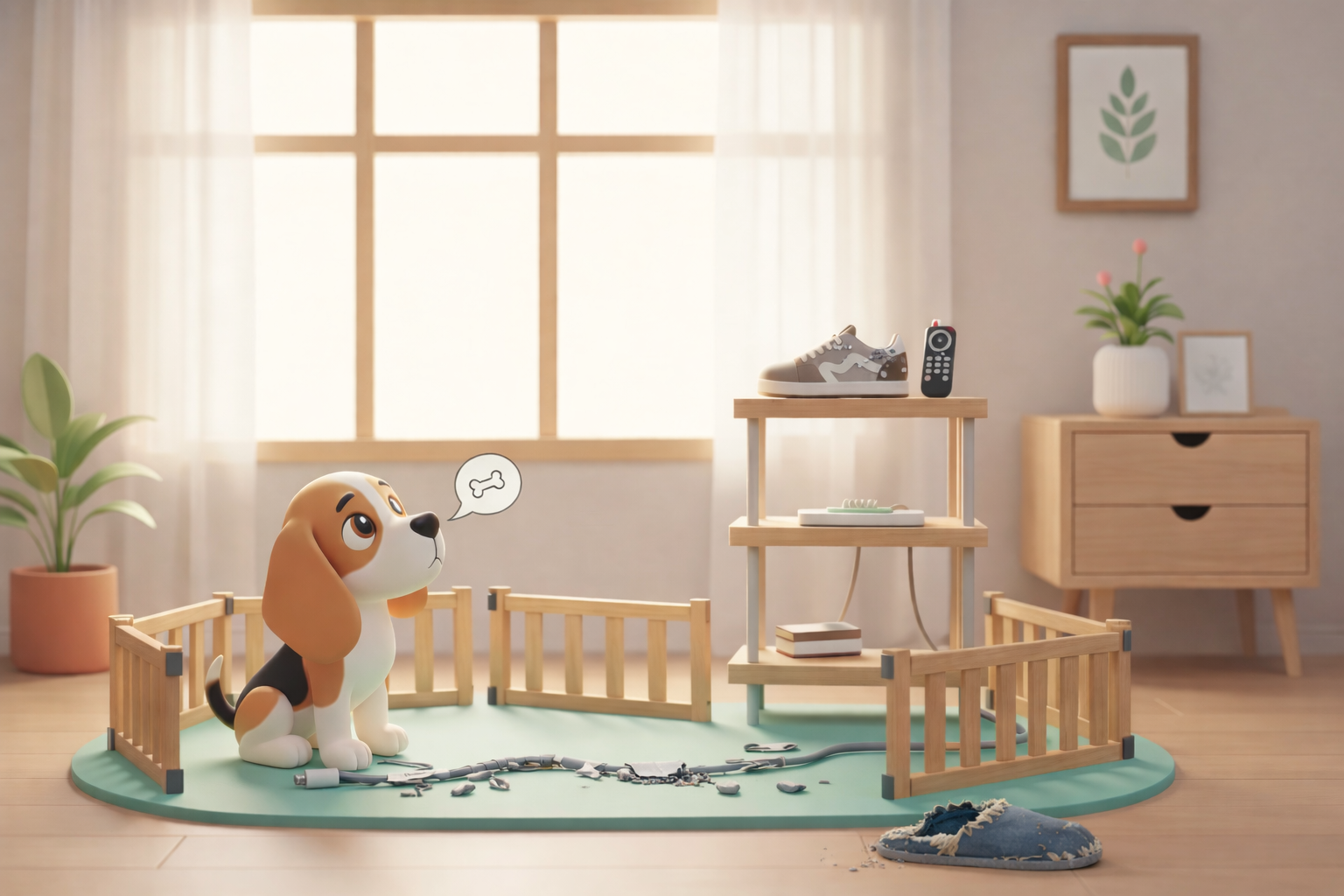
If you’re reading this puppy training guide, your living room probably looks like a battlefield right now.
I get it—trust me. Some dog owners have watched their table legs disappear, while others (like me) have had to replace 12 remote controls because their dog decided they tasted irresistible.
Destructive chewing behavior is frustrating, expensive, and tests your patience like nothing else.
If you’ve just adopted a dog, especially a puppy, this is reality: we’ve all been there!
That’s exactly why we’ve created this comprehensive puppy-proofing checklist to help you stop destructive chewing and navigate this challenging phase with your new puppy.
Ready? Let’s dive in!
Understanding Why Puppies Chew Everything: Dog Behavior Explained
The first thing to understand is fundamental: your dog isn’t chewing furniture out of spite.
Contrary to popular belief, dogs don’t chew destructively to get revenge. Here’s what’s really happening with your puppy’s chewing behavior:
Chewing Relieves Stress and Anxiety
The act of chewing releases endorphins and serotonin—the feel-good neurotransmitters. It’s your dog’s natural way of relieving stress and managing anxiety.
It’s Natural Canine Exploration
For a puppy, the mouth is the primary tool for discovering the world around them. This exploratory chewing is completely normal dog behavior.
Teething Pain Relief
Between 4 and 7 months of age, puppy teething causes inflamed gums. Chewing is the only way puppies can soothe this discomfort during the teething phase.
Phase 1: Puppy-Proofing Your Home – Prevention and Protection Tips
Effective puppy-proofing is your first line of defense against destructive chewing. Here’s how to dog-proof your home:
Secure Electrical Cords and Cables
Hide them behind furniture or cover them with rigid cable protectors. Chewing on electrical cords is dangerous for puppies.
Protect Furniture with Bitter Spray
Apply non-toxic bitter apple spray or bitter cherry spray to table legs, baseboards, and furniture corners. These dog deterrent sprays are safe and effective.
Use Tactile Deterrents for Dogs
Place double-sided tape or aluminum foil on furniture corners or areas where your dog tends to chew. Most dogs dislike these textures.
Remove Chew-Tempting Objects
Move shoes, remote controls, books, and glasses to inaccessible places (closed cabinets or high shelves). Prevent access to inappropriate chew items.
Create Safe Spaces with Dog Gates
If you can’t supervise your puppy, use an indoor dog pen or puppy playpen with baby gates to limit access to rooms with valuable furniture.
Phase 2: Redirect Chewing Behavior with Appropriate Dog Toys
Don’t just say “don’t chew”—provide positive alternatives. Here are the best puppy chew toys and enrichment ideas:
DIY Frozen Teething Relief
For teething puppies (4-7 months), freeze a large carrot or damp washcloth for 30 minutes. This frozen teething toy numbs gum pain naturally.
Long-Lasting Natural Dog Chews
Provide durable chew toys like heather roots, deer antlers, or bully sticks. These natural chews last for hours and satisfy your dog’s chewing instinct while promoting dental health.
DIY Interactive Dog Toys
Take an old sock, stuff a tennis ball or durable rubber toy inside, and tie it tightly. This simple homemade dog toy provides safe chewing entertainment.
Practice the “Trade-Up” Training Method
Every time you catch your puppy chewing inappropriate items, calmly remove the object and immediately offer an acceptable chew toy. This positive reinforcement training redirects the behavior.
Invest in Puzzle Feeders and Treat-Dispensing Toys
Mental stimulation for dogs is crucial. Use interactive dog toys and puzzle feeders to keep them mentally engaged and reduce boredom-related destructive behavior.
Rotate Dog Toys to Maintain Interest
Don’t leave all toys available all the time. Rotate 1-2 different toys each day to maintain novelty and prevent toy boredom.
💡 Mental Stimulation for Dogs
15 minutes of brain games for dogs and puzzle play tires your puppy as much as an hour-long walk while providing mental enrichment and reducing anxiety.
Phase 3: Mental Enrichment Activities to Prevent Destructive Chewing
Destructive chewing is often caused by boredom or excess mental energy with no outlet. Canine enrichment is key to preventing problem behaviors.
Use Food Puzzle Toys for Mental Stimulation
Food-dispensing toys and DIY enrichment activities (like a rolled towel with kibble inside) engage your dog’s problem-solving skills and natural foraging instincts.
Leave Enrichment Toys When You’re Away
Combat separation anxiety in dogs by leaving engaging chew toys or frozen Kong toys ready when you leave for work. This prevents anxiety-driven, destructive behavior.
Reward Good Chewing Behavior
Use positive reinforcement dog training: every time you see your puppy spontaneously choose their toy instead of furniture, praise and reward them with treats. This reinforces desired behaviors.
Provide Daily Exercise and Play
Physical exercise combined with mental stimulation reduces excess energy that leads to destructive chewing. Regular dog walks and playtime are essential.
Phase 4: Common Puppy Training Mistakes to Avoid
When you discover destroyed furniture, staying calm is extremely difficult. But these common mistakes can worsen destructive behavior:
Never Punish After the Fact
Dogs have a short-term memory for consequences. Punishing hours after the incident damages trust and doesn’t address the root cause of chewing behavior.
Avoid Yelling or Physical Punishment
Harsh corrections increase stress and anxiety, which are primary triggers for compulsive chewing in dogs. Stay calm and use positive training methods.
Don’t Use Muzzles as a Long-Term Solution
Muzzles, constant confinement, or tying up your dog increase stress—the main cause of destructive chewing behavior. These methods don’t address the underlying issue.
Don’t Neglect Your Puppy’s Needs
Insufficient exercise, mental stimulation, and enrichment lead to boredom and destructive behavior. Meet your puppy’s physical and mental needs daily.
How Long Does the Puppy Chewing Phase Last?
The intense puppy teething and chewing phase typically lasts until 6-8 months of age, though some dogs continue exploratory chewing up to 2 years old. With consistent training and proper enrichment, most puppies learn appropriate chewing habits within a few months.
Best Puppy Chew Toys: Product Recommendations
Looking for the best chew toys for puppies? Consider these veterinarian-recommended options:
- KONG Classic Dog Toys – Durable rubber toys perfect for frozen treats
- Nylabone Puppy Chew Toys – Long-lasting nylon bones for teething relief
- West Paw Zogoflex Toys – Tough, safe chew toys for aggressive chewers
- Benebone Chew Toys – Flavored nylon bones dogs love
- Natural Antler Chews – Long-lasting, natural chewing options
- Nina Ottosson Puzzle Toys – Interactive dog puzzles for mental stimulation
Stop Puppy Chewing: Your Action Plan
Congratulations! You’ve learned how to stop puppy chewing and prevent furniture destruction.
This destructive phase won’t last forever. With patience, consistency, and positive reinforcement training, your puppy will learn what’s appropriate to chew and what isn’t.
Remember: puppy-proofing + appropriate chew toys + mental enrichment + positive training are your four pillars of success in stopping destructive chewing behavior.
Stay consistent with these puppy training strategies, and soon you’ll have a well-adjusted dog who knows the difference between their toys and your belongings.
Your furniture (and your wallet) will thank you.
Leave a Reply